Gran Canaria Airport Car Rental from 17 €/Day – No Hidden Fees
Gran Canaria Airport Car Rental from 17 €/Day – No Hidden Fees
Renting a car at Gran Canaria Airport (LPA) from 17 €/day looks straightforward on a search results page, yet the real cost only becomes visible once you line up several offers and read their terms. Rental Car For You presents a board of more than 60 offers from 38 companies, with pickup on arrival and clearly stated prices, and that breadth is exactly why the comparison has to be done carefully. Rental Car For You is a useful starting point for seeing which rental cars are available at the airport right now, but the headline rate is only the first number in a longer calculation. This article works through how that calculation is built, which items deserve scrutiny, and how to execute the handover at LPA without losing time or money. The aim is to help you judge each offer on its total, not on its opening figure.

Understanding the Gran Canaria Airport Rental Market
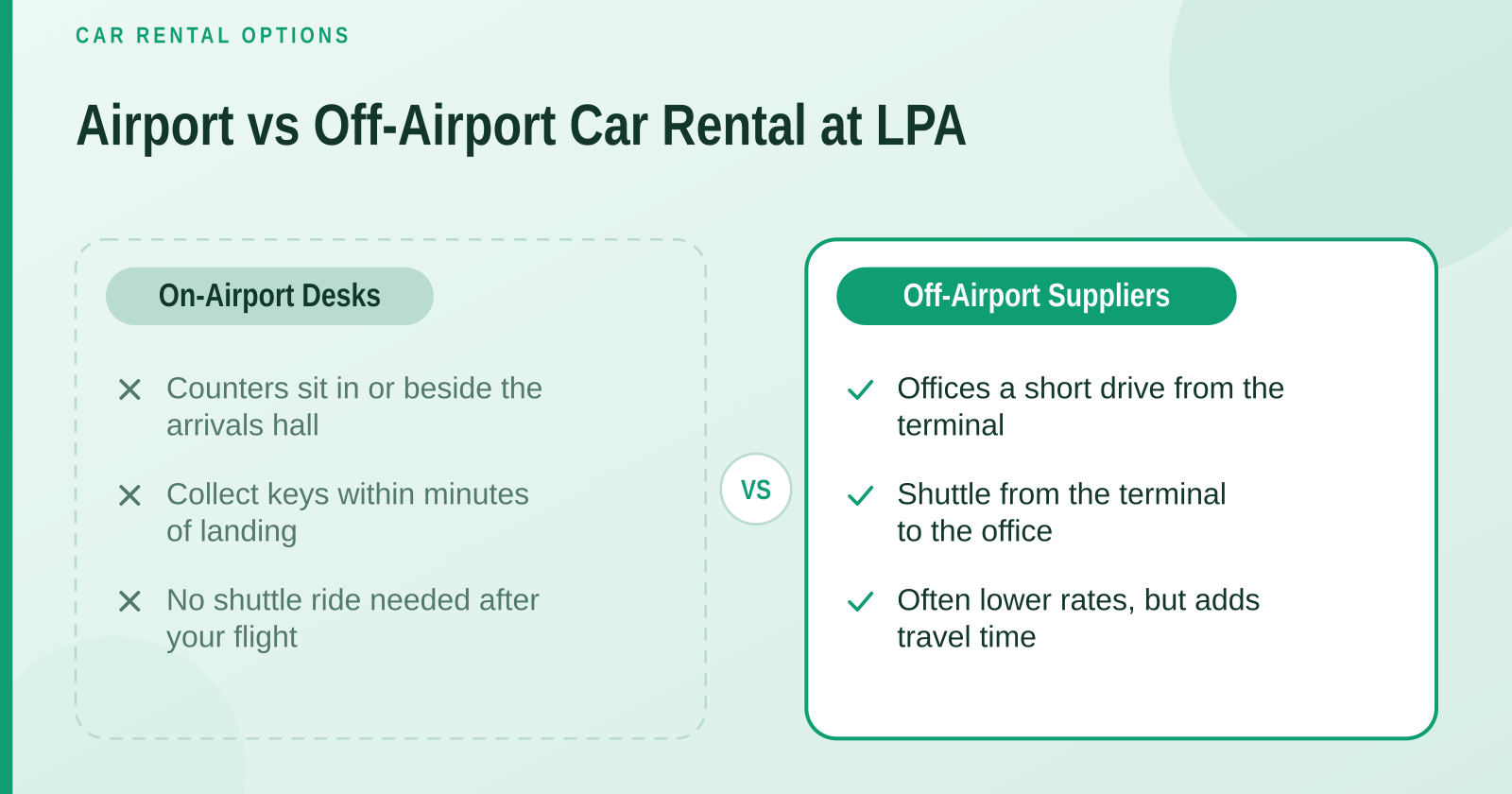
The rental supply at LPA divides into two groups with different operating logic. On-airport desks sit in or beside the arrivals hall, so you move from baggage reclaim to the counter and collect keys within minutes of landing. Off-airport suppliers run offices a short drive away and provide a shuttle from the terminal. The shuttle is frequently the reason a rate looks lower, because the company avoids certain airport concession charges and can pass part of that saving on. The cost of that saving is time: you add the shuttle ride in each direction and any waiting that comes with it, which matters most after a long-haul or late arrival. Whether you book directly with the on-airport desk or compare the shuttle-based offers, the total price after taxes and mandatory insurance is what matters, and you can learn more about how each option is structured before you commit.
At the desk, document the car thoroughly, confirm every term in writing and return it with the fuel and paperwork in order
- Forgetting to confirm return hours outside standard opening times is another common error, as is leaving a booking unverified against the actual flight time
- If you plan to drop the car at a different location, confirm in advance whether a one-way fee applies
- Any discrepancy should be raised at that moment rather than after you have left the premises
- Read the insurance layers carefully, verify the exclusions that apply to tyres, glass and rural roads, and match the vehicle to the actual route and luggage
Beyond location, operators fall into three practical categories. Major international brands generally offer more consistent fleets, longer opening hours and more standardised paperwork, although their base rates are not always the lowest on the page. Local Spanish companies often price aggressively and know the island's road network well, but their terms on deposits, excess and fuel policy vary more from one provider to the next, so the small print needs more attention. Budget specialists sit between these groups, competing on headline price and frequently presenting optional extras at the counter. Identifying which category an offer belongs to tells you what level of service and what kind of contract to expect before you read the detailed conditions.
Aggregators and direct bookings also shape the price you actually see. An aggregator lets you compare many suppliers in one search, which speeds up the shortlist, but the rental contract is with the supplier that operates the car, not with the platform displaying it. Booking direct can give clearer access to the supplier's own customer service, while an aggregator may provide a single support line across several providers. Neither route is automatically superior. What matters is that your confirmation names the supplier, the pickup location, the return point and the full conditions, so that you know exactly whom to contact if something changes.
Why Prices Start at 17 €/day and What Drives Them
A base rate of 17 €/day is achievable on Gran Canaria, but it describes a particular combination of circumstances: a small economy car, a rental of several days or more, a booking made ahead of time, and travel outside the busiest weeks of the year. Change any one of these variables and the price moves. Car class is the most obvious lever, since a compact hatchback is priced well below an SUV or a people carrier. Rental length matters too, because many suppliers reduce the daily rate on longer hires, so a seven-day booking often works out cheaper per day than a three-day one, even though the total rises.
Booking lead time is the second lever. Rates for the same vehicle tend to be lower when reserved several weeks ahead, because suppliers have not yet adjusted availability to demand. As the date approaches and the fleet thins, the cheapest cars disappear first and the remaining options carry higher prices. Season is the largest single driver. The island's appeal to winter visitors means that the periods around the Christmas and Easter holidays, along with the summer peak, carry noticeably higher prices than the shoulder months between them. If your dates are flexible, moving a trip a few days away from a peak weekend can shift the total meaningfully while the car itself stays identical.
The advertised daily rate rarely equals the final amount paid, and this gap is where many travellers feel misled. The headline figure generally excludes the fuel policy you accept, optional insurance that reduces your excess, additional drivers, child seats and sometimes airport or station surcharges. A fair comparison adds these items to every offer before ranking them. Treat the 17 €/day figure as the entry point to a calculation, not as the final bill, and you will avoid most of the surprises that come at the counter.
Evaluating the Real Cost of a Rental
The total cost of a rental combines several elements, and each can change the ranking of offers. Start with the base rate, then add mandatory charges, the insurance you select, the fuel policy and any extras you need. Mandatory charges depend on the supplier and the location and may include airport concession fees, applicable tax and a young-driver supplement. Once these are visible, the cheapest headline offer is not always the cheapest final price, and a slightly higher daily rate with fuller cover can prove the better value.
Extras deserve close attention because they accumulate quickly. Child seats, additional drivers, GPS units and winter equipment are commonly priced per day, so a modest fee applied across a seven-day trip becomes a significant sum. Ask whether an additional driver is included at no charge in a given offer, since some suppliers waive that fee and others charge it every day of the rental. Similarly, confirm that a child seat is actually available in the chosen car before assuming you can add one, because availability can be limited on smaller models.
The deposit, often called the excess, is the amount the supplier holds against your card to cover damage or a missing fuel refill. In most cases it is blocked rather than charged, and it is released once the car is returned in the agreed condition. The size of the hold depends on the car class and on the insurance you take, and higher cover usually means a lower deposit. Verify the figure in the offer and make sure your card has enough available credit to cover it alongside the rental itself, because a declined hold can delay or derail the pickup.
To estimate the total for a three-, seven- or fourteen-day trip, multiply the daily rate by the number of days and add the fixed charges once. Then add the daily extras multiplied by the days they apply, include the insurance you choose, and set aside an estimate for fuel based on your planned driving. Repeating this for two or three offers often changes the order. A bargain rate that leaves you exposed to a large excess can cost more in practice than a mid-priced offer with full cover and a smaller deposit.
Insurance and Liability Options Explained
Insurance on a Spanish rental usually comes in layers. Basic statutory cover is included and protects against third-party liability, which is the legal minimum. Above it sits the excess, the amount you pay toward damage to the rental car before the insurer covers the remainder. Excess reduction packages lower that amount, while full waiver packages remove most or all of it. Understanding these layers prevents you from paying twice for cover you already hold, or from driving away without protection you actually need.
Gaps in cover tend to appear in predictable places. Tyres, glass, the underbody and the roof are frequently excluded or subject to separate charges, so damage in those areas can fall on you even under a standard package. Driving on unsurfaced or unpaved roads may also void cover, which is relevant on an island with many rural tracks. If you plan to rely on a credit card's built-in insurance, check whether it covers rental cars in Spain, whether it is primary or secondary cover, and whether declining the supplier's waiver changes the deposit the supplier holds.
Before signing, work through a short checklist. Confirm what the basic cover includes and excludes, the excess amount, what the full waiver removes and what it still leaves, and the precise list of excluded parts. Check whether any existing third-party policy provides rental cover in Spain and what paperwork it requires after an incident. Ask how a claim is reported and within what timeframe, and save the emergency contact number in your phone before you leave the car park. Reading these points in advance is far simpler than negotiating them after something has gone wrong. Many travellers focus only on the daily rate and overlook the deposit, fuel policy and drop-off charges, so it helps to review common mistakes that often inflate the final bill at Gran Canaria.
Vehicle Class, Transmission, and Route Fit
Matching the car to the route matters on Gran Canaria. The island combines the flatter, busier roads around the airport and the south with steep climbs toward the interior and the north. A small car handles town traffic and parking well, but it may feel strained on sustained gradients with several passengers and luggage on board. A compact model with a slightly stronger engine is often the most practical compromise for mixed use, while larger vehicles add space and comfort at the cost of harder parking in historic centres and higher fuel spending.
Transmission is a separate decision. Automatic cars are less common than manuals across most rental fleets and typically carry a higher price. If you are not fully confident with a manual gearbox, particularly on steep hill starts, reserve an automatic early, since availability can close quickly in busy periods. Confirm the gearbox type on the offer card, because the model name alone does not always make it clear.
Luggage capacity and seating should be checked against your actual group rather than an ideal version of it. Count the suitcases, the passengers, and any child seats or sports equipment you will carry. Boot space is often quoted in litres, but the shape of the bags matters as much as their volume. Families travelling with pushchairs should also consider door width and the height of the boot opening. A car that looks sufficient on paper can prove cramped once everything is loaded at the kerb.
Pickup on Arrival at LPA: Execution Steps
The process begins once you leave the aircraft. You pass passport control, collect luggage from the reclaim belt, and then follow the airport signage toward the rental desks or the shuttle point. Allow generous time for the bags to appear, because a full flight can delay reclaim considerably before you even reach the rental zone. At the desk, the agent checks your licence, passport, booking reference and payment card, then explains the deposit and fuel policy before handing over the keys and paperwork.
Desk inside the terminal and shuttle pickup differ mainly in waiting time and in the feel of the journey. A counter in the arrivals hall lets you complete the transaction and walk straight to the car park, which suits travellers who want to leave quickly. A shuttle adds a ride to a separate office, and at peak arrival times the queue for the bus can be as long as the queue at a counter. Neither option is inherently slower, but the shuttle lengthens the overall trip and requires you to carry luggage onto and off the bus.
Practical implications depend on who is travelling. Families with children and several suitcases usually benefit from a desk where the car can be reached with a short walk, and they should confirm the chosen vehicle accepts the child seats they need. Business travellers often prioritise the fastest handover and value a supplier with reliable hours and an efficient counter. Late-night arrivals need particular care, because many off-airport offices close outside standard hours and some suppliers apply a surcharge for after-hours collection or require prior arrangement. Confirm the procedure in writing before you land rather than discovering it at the counter at midnight.
Several frequent mistakes can be avoided with preparation. Travellers often accept upsell offers at the desk without checking them against the existing booking, skip the vehicle inspection because they are short of time, or misread the fuel policy and return the car with the wrong level. Each of these points is far easier to settle before you arrive than during the handover itself.
Returning the Vehicle and Closing the Rental Correctly
The return is as important as the pickup, because most disputes over deposits arise at this stage. Refuel the car to the level specified in your contract, keep the receipt as evidence, and return it within the agreed hours. Arriving outside opening hours should be arranged beforehand, since an unattended return can leave you without a signed record of the car's condition.
Compare the vehicle against your pickup photographs and video in the presence of a staff member, and ask for a signed check-in report stating that no new damage has been recorded. Keep copies of the contract, the deposit information and all receipts until the hold has been released from your card, which typically happens within a few working days, depending on your bank.
Conclusion
Renting at Gran Canaria Airport from 17 €/day is realistic, but the figure is a starting point rather than a verdict. The sensible method is to build the total cost for each offer, including mandatory charges, insurance, deposit, fuel policy, extras and the time cost of an on-airport desk versus a shuttle. Approached this way, a low daily rate becomes a predictable bill, and the choice of supplier rests on evidence rather than on the first number you see.


Комментарии
Отправить комментарий